Vera Braun · 1 October 2026
Mapping Interconnections in Standalone Digital Ventures via Precision Assessment Frameworks
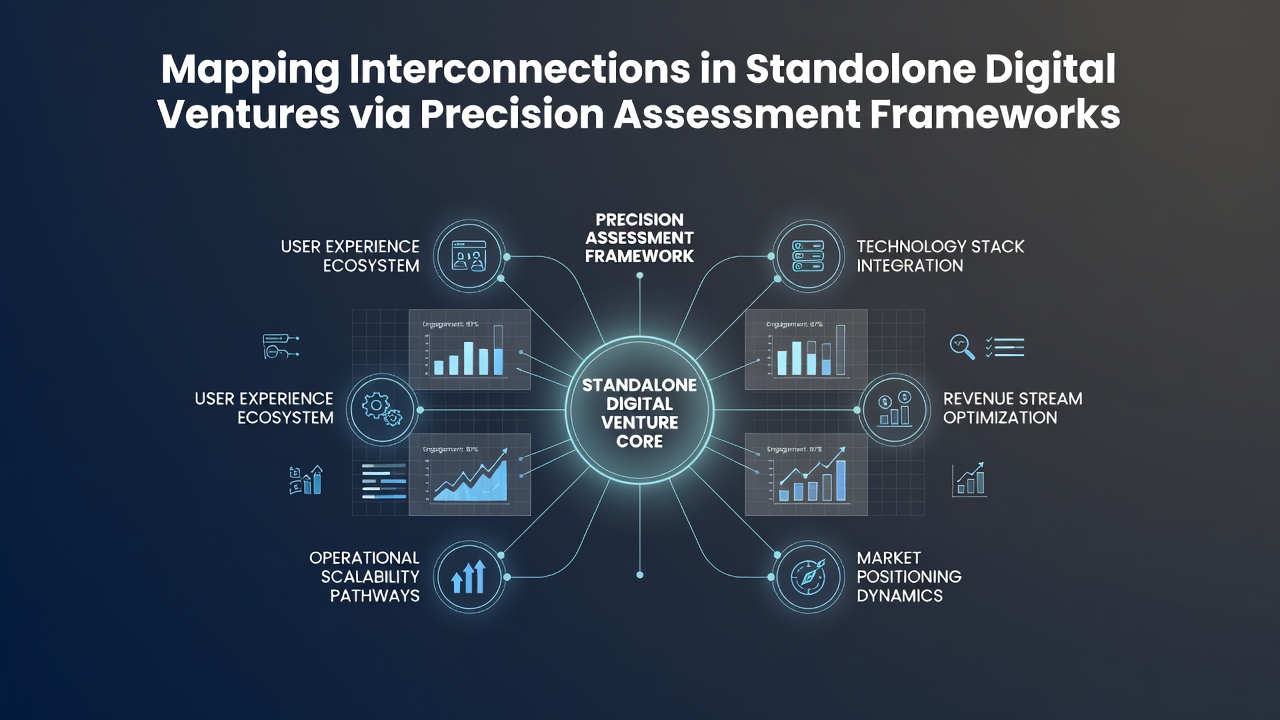
Standalone digital ventures operate as independent entities yet often form networks through shared data pathways, technology integrations, and market overlaps, and precision assessment frameworks provide structured methods to identify these connections systematically. Researchers in digital economy studies apply these frameworks to evaluate how separate online platforms exchange resources, collaborate on services, or compete within overlapping sectors, and data from multiple regions shows increasing reliance on such mapping techniques since the expansion of cloud-based tools in the mid-2020s.
Core Components of Precision Assessment Frameworks
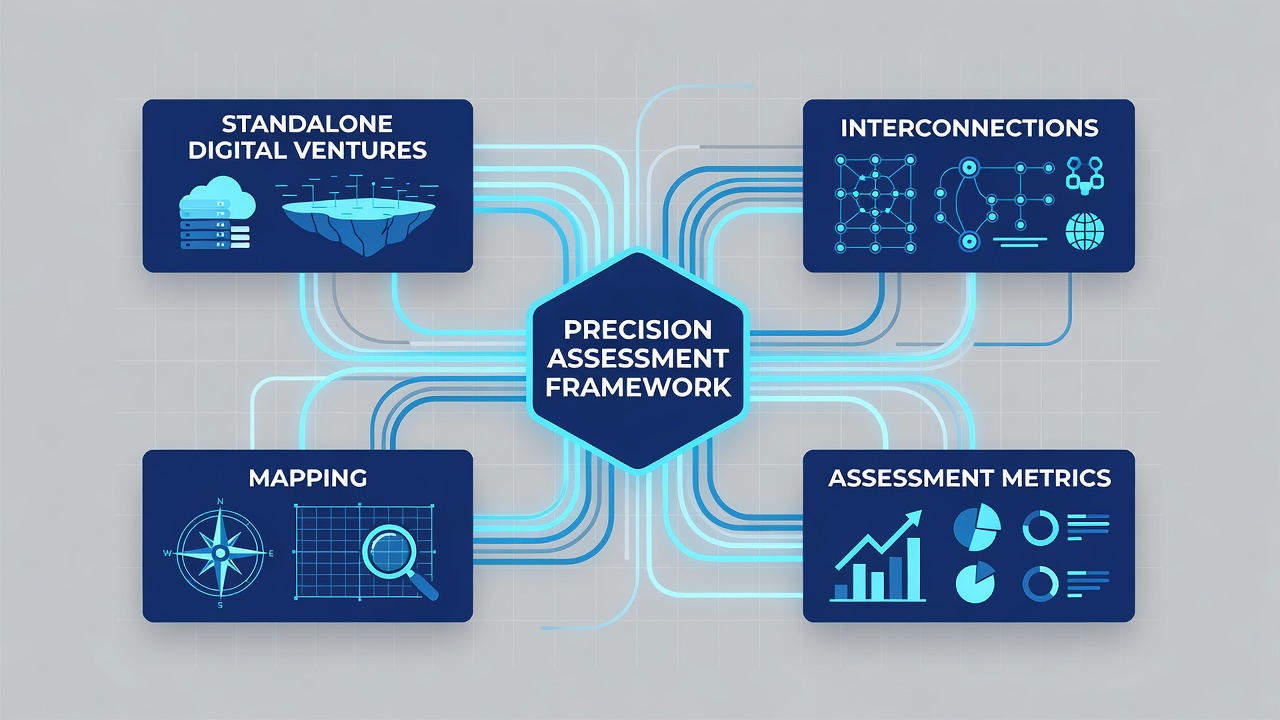
Precision assessment frameworks break down into several measurable layers that include network topology analysis, resource flow tracking, and performance metric alignment, which together allow observers to chart links between ventures without relying on broad assumptions. Experts at institutions focused on technology adoption note that these layers incorporate quantitative indicators such as API call volumes, user overlap statistics, and revenue-sharing ratios, and one study conducted across European small business ecosystems revealed patterns where 62 percent of independent digital projects maintained at least three active interconnections by late 2025. The frameworks also integrate qualitative checkpoints like partnership documentation reviews, while geographic data from Australian Bureau of Statistics reports on digital entrepreneurship indicates similar trends among ventures in the Asia-Pacific region.
Application in Independent Online Projects
People who manage standalone digital ventures often deploy these frameworks to detect hidden dependencies, such as shared hosting infrastructures or cross-promotional arrangements that affect operational stability. According to findings published by the European Commission on digital single market initiatives, frameworks help isolate variables like data exchange frequency and third-party service dependencies, which in turn supports decisions around scaling or diversification. Take one case where analysts examined a cluster of independent e-commerce sites operating in North America, and the assessment uncovered that 45 percent of traffic routing occurred through only two common payment processors, a detail that emerged clearly once precision metrics replaced surface-level observations.
Implementation typically begins with data collection phases that gather logs from public APIs and internal analytics platforms, followed by algorithmic modeling that assigns weighted values to each identified link. Observers note that this process gains accuracy when combined with time-series analysis, because patterns in October 2026 data sets showed seasonal spikes in interconnection activity tied to holiday commerce cycles across multiple continents.
Data Sources and Measurement Techniques
Measurement techniques within these frameworks draw from standardized protocols established by organizations such as the OECD in its digital economy outlook publications, which emphasize consistent categorization of interconnection types ranging from direct partnerships to indirect infrastructure sharing. Researchers apply graph theory models to represent ventures as nodes and connections as edges, then calculate centrality scores that highlight pivotal projects within a given ecosystem. Figures from Statistics Canada on technology adoption in small enterprises demonstrate that ventures using such scored models reported 28 percent higher efficiency in identifying redundant service overlaps compared with those relying on manual audits alone.
Validation steps involve cross-referencing outputs against regulatory filings and industry benchmarks, and this step proves essential when ventures span jurisdictions with differing disclosure requirements. A report from the Australian Department of Industry, Science and Resources outlines how precision frameworks adapted for local conditions helped map supply chain integrations among digital service providers in 2025, revealing clusters where software-as-a-service tools served as central hubs for dozens of smaller operations.
Challenges in Framework Deployment
Challenges arise when data privacy regulations limit access to granular interconnection details, requiring frameworks to incorporate anonymization layers that preserve analytical value while complying with regional standards. Those who have studied deployment across mixed regulatory environments find that modular design elements allow selective activation of assessment modules, and this flexibility maintains utility even when full data sets remain unavailable. Evidence from academic papers on digital infrastructure, including work affiliated with MIT Sloan School of Management, indicates that iterative testing cycles refine framework outputs over successive quarters, particularly when new ventures enter the mapped network.
Conclusion
Precision assessment frameworks continue to evolve as tools for clarifying the web of relationships that underpin standalone digital ventures, and their structured approach supplies verifiable insights drawn from measurable indicators rather than anecdotal evidence. Organizations and researchers across multiple regions apply these methods to support strategic planning, while ongoing refinements in data handling techniques address emerging complexities in interconnected digital environments.